What Causes Tooth Discoloration
Understanding the reasons behind tooth discoloration is the first step toward finding effective solutions. Teeth can lose their natural whiteness due to a variety of factors, ranging from the foods and drinks we consume to our lifestyle choices and even aging. Knowing these causes empowers you to not only whiten your teeth but also to prevent future staining. It’s a journey of understanding your oral health and making informed decisions to maintain a bright, confident smile. By addressing the root causes, you can choose the most appropriate at-home remedies and lifestyle adjustments to restore and maintain your pearly whites.
Common Causes of Stained Teeth
Several factors contribute to the staining of your teeth, and it’s essential to be aware of them. This knowledge will help you make informed choices to protect your smile. The main culprits include dietary habits, lifestyle choices, and the natural aging process. The enamel, the hard outer layer of your teeth, gradually thins with age, revealing the yellowish dentin underneath. Furthermore, the consumption of certain foods and beverages can stain the teeth over time. Smoking and tobacco use also significantly impact tooth color. Regular dental checkups are crucial in identifying and addressing the causes of staining early on.
Dietary Habits

What you eat and drink plays a significant role in the color of your teeth. Certain foods and beverages are notorious for causing stains. Coffee, tea, red wine, and dark-colored sodas are well-known for their staining properties due to the presence of chromogens, which are color-producing substances. Additionally, highly pigmented fruits like blueberries, blackberries, and cherries can contribute to staining. Frequent consumption of these items without proper oral hygiene can lead to significant discoloration over time. Consider moderating your intake of these items and rinsing your mouth with water after consuming them to minimize staining.
Lifestyle Choices
Lifestyle choices can have a profound impact on your teeth’s appearance. Smoking and tobacco use are major contributors to tooth discoloration. The nicotine and tar in tobacco products leave yellow or brown stains on the teeth and can also lead to other oral health problems. Poor oral hygiene practices, such as infrequent brushing and flossing, can exacerbate staining. Neglecting regular dental checkups allows stains to accumulate and can lead to more serious issues. Taking good care of your oral health can significantly improve and maintain the natural whiteness of your teeth.
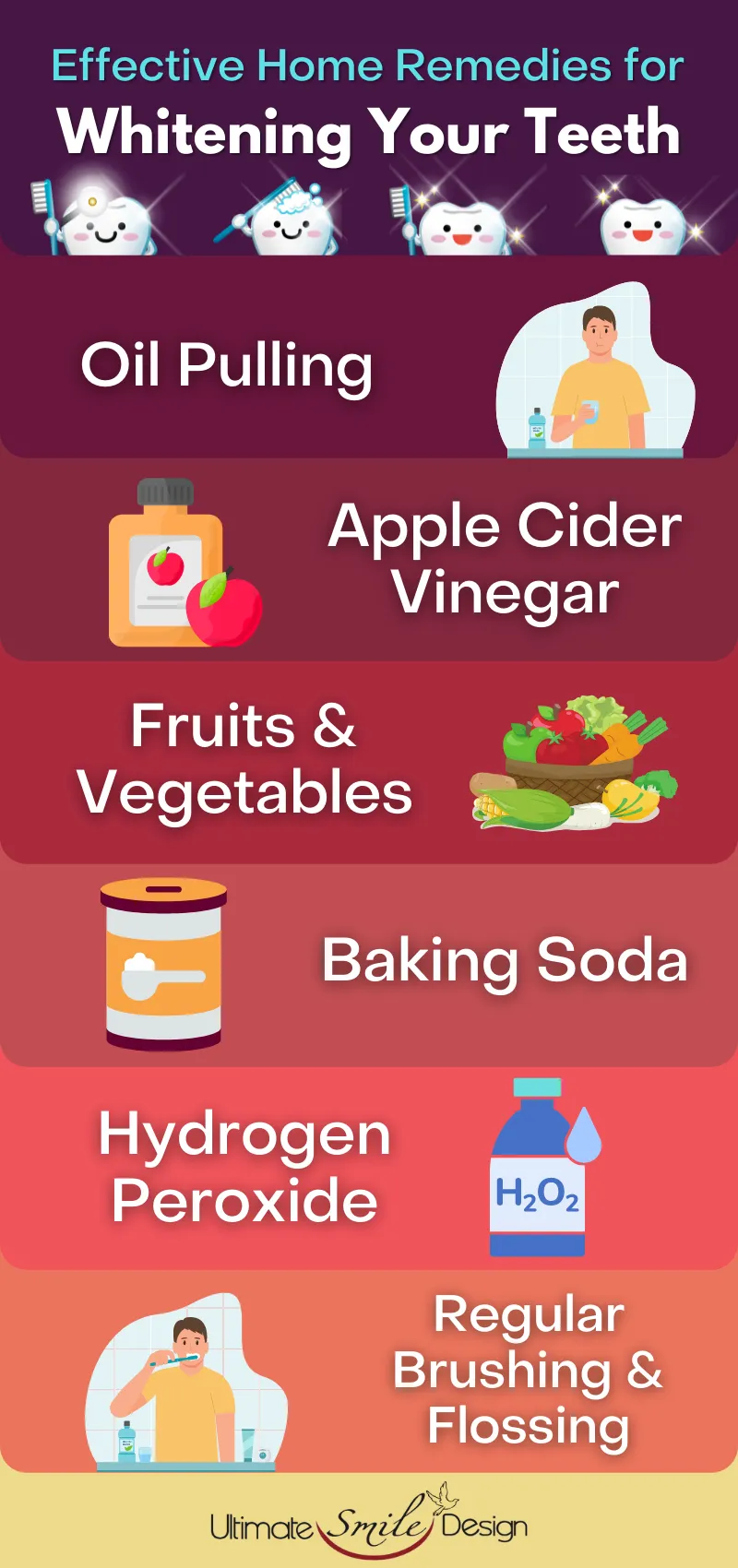
Top 7 At-Home Teeth Whitening Remedies
If you are looking for solutions, at-home teeth whitening remedies provide a convenient and accessible way to brighten your smile. With the right knowledge and products, you can achieve noticeable results without the need for expensive professional treatments. The following remedies have been proven to be effective when used correctly. However, it is important to be cautious and ensure that you’re not using any method that could harm your teeth. Before trying any new whitening method, especially if you have sensitive teeth or existing dental issues, consult with your dentist for advice.
Baking Soda and Hydrogen Peroxide

Baking soda and hydrogen peroxide is a widely used and effective combination for teeth whitening. Baking soda acts as a mild abrasive that gently scrubs away surface stains, while hydrogen peroxide has a bleaching effect that helps to lighten the enamel. This combination is accessible and affordable. However, it’s crucial to use this method with care, as excessive use can damage your enamel. Using a small amount and rinsing thoroughly after brushing is key. Furthermore, this remedy may not be suitable for everyone, especially if you have sensitive teeth or gums. Proper use can help achieve visible whitening results.
How to Use Baking Soda and Hydrogen Peroxide
To use baking soda and hydrogen peroxide effectively, start by mixing one teaspoon of baking soda with two teaspoons of hydrogen peroxide to create a paste. Gently brush your teeth with the paste for about two minutes, making sure to reach all surfaces. After brushing, rinse your mouth thoroughly with water. Use this method no more than twice a week to avoid enamel erosion. Remember to consult your dentist to make sure this method is safe for your teeth. Using the proper technique will help you brighten your smile safely.
Coconut Oil Pulling
Coconut oil pulling is an ancient Ayurvedic practice that involves swishing coconut oil in your mouth to remove bacteria and toxins. While its primary benefits are for oral health, many people report that it also helps whiten teeth. Coconut oil can help remove bacteria and plaque, which can contribute to tooth discoloration. It’s a natural and gentle approach to whitening. Additionally, it’s known for its antibacterial and anti-inflammatory properties. Coconut oil pulling is a great option for those looking for a natural and holistic way to improve their oral health and brighten their smile.
Benefits of Coconut Oil Pulling

The benefits of coconut oil pulling extend beyond teeth whitening. It can improve overall oral health by reducing bacteria, preventing plaque buildup, and freshening breath. Some studies suggest that coconut oil pulling may also help reduce gingivitis and improve gum health. It is a simple and affordable practice that can be easily incorporated into your daily routine. Swishing coconut oil in your mouth each day can lead to a healthier mouth and a brighter smile over time. The benefits are not limited to just whitening; it also contributes to healthier gums and fresher breath, making it a comprehensive oral hygiene practice.
Whitening with Activated Charcoal
Activated charcoal is a popular natural remedy for teeth whitening. It works by adsorbing stains and impurities from the teeth. The porous structure of activated charcoal helps to capture surface stains caused by food and drinks. When used correctly, it can effectively brighten your smile. However, caution is advised as excessive or improper use can damage the enamel. Opt for activated charcoal products designed for dental use and be sure to follow the instructions carefully. Using activated charcoal is a natural and accessible way to remove stains and achieve a whiter smile.
How to Use Activated Charcoal
To use activated charcoal, you can either buy activated charcoal toothpaste or use charcoal powder. If using powder, lightly wet your toothbrush and dip it into the charcoal. Gently brush your teeth for about two minutes, focusing on all surfaces. Rinse thoroughly with water. It’s important to be careful when using activated charcoal as it can be messy and stain fabrics. Limit the use to a few times a week to avoid excessive abrasion. Always consult your dentist. Remember to be patient and consistent to see the best results.
Using Lemon Juice for Whitening

Lemon juice is a natural bleaching agent, making it a potential option for teeth whitening. The citric acid in lemon juice can help to break down stains and brighten your teeth. It is a quick and accessible option, as lemon juice is easy to obtain. However, it is important to use caution as lemon juice is highly acidic. Overuse can erode the enamel, leading to tooth sensitivity and other dental issues. Diluting the lemon juice and rinsing thoroughly after use is essential. Using lemon juice as a whitening remedy requires careful consideration and moderation.
Precautions When Using Lemon Juice
Given the high acidity of lemon juice, there are several precautions to keep in mind. Never use pure lemon juice directly on your teeth. Always dilute it with water to reduce the acidity. Limit its use to once or twice a week, and never brush your teeth with lemon juice for an extended period. After using lemon juice, rinse your mouth thoroughly with water and consider brushing your teeth to remove any remaining acid. If you experience any sensitivity or discomfort, discontinue use and consult with your dentist. Prioritizing safety and proper technique is crucial to protecting your enamel.
Whitening with Apple Cider Vinegar
Apple cider vinegar (ACV) is another natural remedy that some people use for teeth whitening. ACV has antibacterial properties and can help to remove surface stains. When used in moderation, it can contribute to a brighter smile. It is important to use it cautiously and dilute the ACV with water before use. Although ACV can have a positive effect on removing stains, it is very acidic and can erode the tooth enamel if used excessively or undiluted. Therefore, it is very important to rinse your mouth thoroughly with water after using it.
Using Apple Cider Vinegar for Whitening

To use ACV for teeth whitening, mix one part apple cider vinegar with two parts water. Swish the diluted solution in your mouth for about a minute, and then rinse thoroughly with water. Brush your teeth afterward. Do not use ACV more than once or twice a week to avoid damaging your enamel. Because it’s highly acidic, it’s essential to use the diluted solution cautiously. As with any at-home remedy, it is recommended that you consult with your dentist before use. Following the proper method will help ensure you achieve whitening results without harm.
Whitening with Strawberries
Strawberries contain malic acid, which acts as a natural astringent and can help remove surface stains from teeth. They are a delicious and readily available option for teeth whitening. While strawberries may not be as powerful as other whitening methods, they can contribute to a brighter smile when used in conjunction with proper oral hygiene. However, it’s essential to use them in moderation and not rely on them as the sole whitening method. As with other natural remedies, proper use and caution are key. Strawberries offer a gentler way to enhance your smile.
How to Use Strawberries
To use strawberries for whitening, mash a fresh strawberry and mix it with a bit of baking soda to create a paste. Gently brush your teeth with the paste for a few minutes, then rinse thoroughly. The baking soda adds an extra layer of stain removal, while the strawberry’s malic acid helps to brighten. This method is gentle but should be used in moderation, about once or twice a week. Always follow this treatment with regular brushing and flossing to maintain your oral health. Be careful not to overdo it as this could damage your teeth.
Over-the-Counter Whitening Products

Over-the-counter (OTC) whitening products are a convenient way to brighten your smile at home. They offer varying degrees of effectiveness, and it is important to choose the right product for your needs. When considering OTC products, read the instructions carefully and choose the product that best suits your needs. Always consult your dentist before use if you have any underlying dental issues. Using these products correctly can help you achieve a brighter smile with ease.
Whitening Toothpastes
Whitening toothpastes are a popular choice, designed to remove surface stains and brighten teeth. They typically contain mild abrasives or chemical agents that aid in stain removal. While they can be effective for removing surface stains, they usually don’t provide the same level of whitening as professional treatments. The abrasives in whitening toothpastes help polish the enamel, which can remove stains and make your teeth appear whiter. It is important to choose a toothpaste with fluoride to strengthen your enamel. Make sure to brush properly to achieve the best results.
Whitening Strips
Whitening strips are another OTC option, containing a thin strip of whitening agent that you apply directly to your teeth. These strips typically contain a peroxide-based bleaching agent. When used as directed, they can effectively remove stains and provide visible whitening results. Always follow the instructions carefully and be consistent for the best outcome. Some people might experience mild sensitivity, so it is best to consult with your dentist if you have concerns or any pre-existing dental issues. Whitening strips are an accessible option for those looking for a convenient way to whiten their teeth at home.
Maintaining Your White Smile
Maintaining a bright, white smile involves a combination of good habits and preventive measures. It is not enough to simply whiten your teeth; you must also protect them from future staining and damage. Proper oral hygiene, a balanced diet, and regular dental checkups are all essential for keeping your smile radiant and healthy. By adopting these habits, you will preserve your teeth’s natural whiteness and ensure your overall oral health for the long term.
Preventing Future Staining
To prevent future staining, be mindful of the foods and beverages you consume. Limit your intake of coffee, tea, red wine, and dark-colored sodas, which are known for staining teeth. Rinse your mouth with water after consuming these items to minimize their impact. Avoid tobacco products as they are major contributors to staining and can also have detrimental effects on your oral health. Maintaining good oral hygiene practices is also crucial. Make sure to brush your teeth twice a day, floss daily, and use a mouthwash to remove food particles and bacteria. Preventing future staining requires a consistent and comprehensive approach to oral care.
Importance of Regular Dental Checkups
Regular dental checkups are essential for maintaining a bright, healthy smile. Your dentist can professionally clean your teeth, removing stains and plaque that you cannot reach at home. They can also identify and address any underlying dental issues, such as cavities or gum disease, which can affect your smile. Regular checkups allow your dentist to monitor the overall health of your teeth. Professional cleanings help to remove stains and keep your teeth looking their best. Scheduling regular dental checkups is a proactive step in protecting your oral health and maintaining a bright, confident smile.